Research Methods To Software
Translate evolving scientific methods into maintainable applications, workflows, and interfaces that research teams can operate repeatedly.
Research Software Engineer
I build durable software for scientific and public-health research: researcher-facing platforms, sequencing workflows, HPC automation, and production systems that turn research methods into reliable operations.
About
I am a Research Software Engineer with 10+ years of experience building software for scientific and public-health research.
My work sits between research teams, laboratory operations, computational pipelines, and production infrastructure. I translate evolving research methods into maintainable applications, automate manual scientific workflows, and support systems long after their first release.
I have built researcher-facing platforms for HIV sequencing, phylodynamic surveillance, Primer ID NGS workflows, cloud-backed file submission, SLURM-based processing, Dockerized reproducibility, and OpenShift/GCP deployment.
I work especially well in domains where the software requirements are not obvious at the start: complex lab processes, large sequence files, changing analysis methods, and teams that need engineering judgment without losing scientific nuance.
Translate evolving scientific methods into maintainable applications, workflows, and interfaces that research teams can operate repeatedly.
Replace spreadsheets, manual file handling, and fragile handoffs with tracked submissions, validation steps, and reproducible processing.
Build across Next.js, GCP storage, signed uploads, Docker, OpenShift, SLURM, and cluster environments for large sequencing workloads.
Support production systems after launch, adapting software as research protocols, lab workflows, and reporting needs change.
10+ years
Research software experience
Statewide
HIV sequencing surveillance workflows
NIH-funded
Researcher-facing NGS platforms
Co-author
Multiple peer-reviewed publications
Featured Research Software
These projects are strongest when evaluated as research infrastructure: they connect scientists, specimens, files, computational pipelines, review workflows, and downstream reporting.
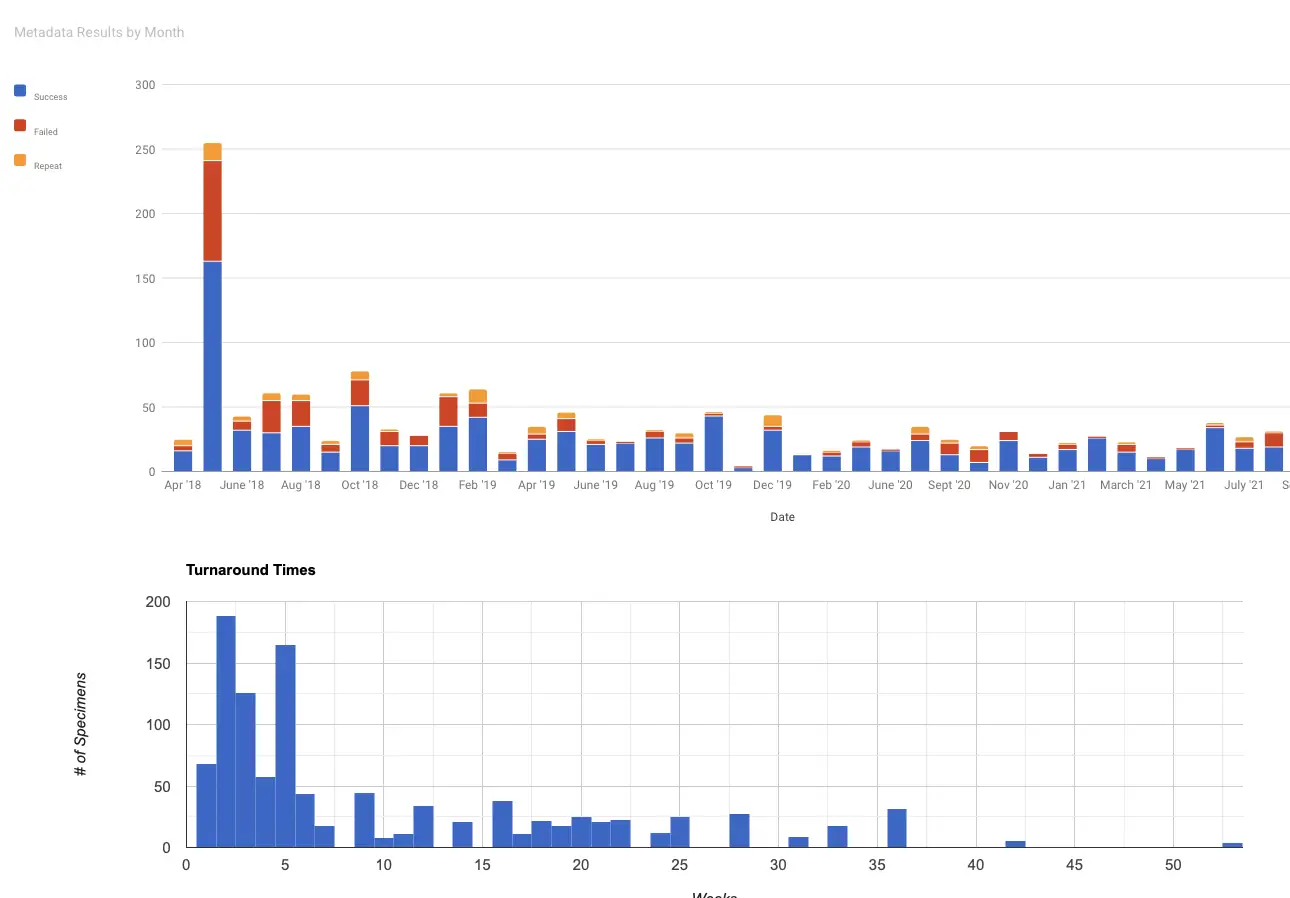
Phylodynamics is an end-to-end scientific software platform that unified specimen management, laboratory workflows, computational analysis, and public-health reporting for statewide HIV sequencing research.
Spreadsheet tracking, manual file workflows, and slow handoffs made it harder to preserve data integrity and move sequencing results through the surveillance process.
Automated specimen tracking, processing watchers, searchable review records, repeat-sampling states, and downstream handoff to existing public-health databases.
Improved data integrity, reduced turnaround time, and supported statewide HIV surveillance workflows used for public-health reporting.
Application architecture, scientific workflow automation, operational support, and translation between researchers, lab staff, and infrastructure constraints.
Website is access protected and the repository is private.
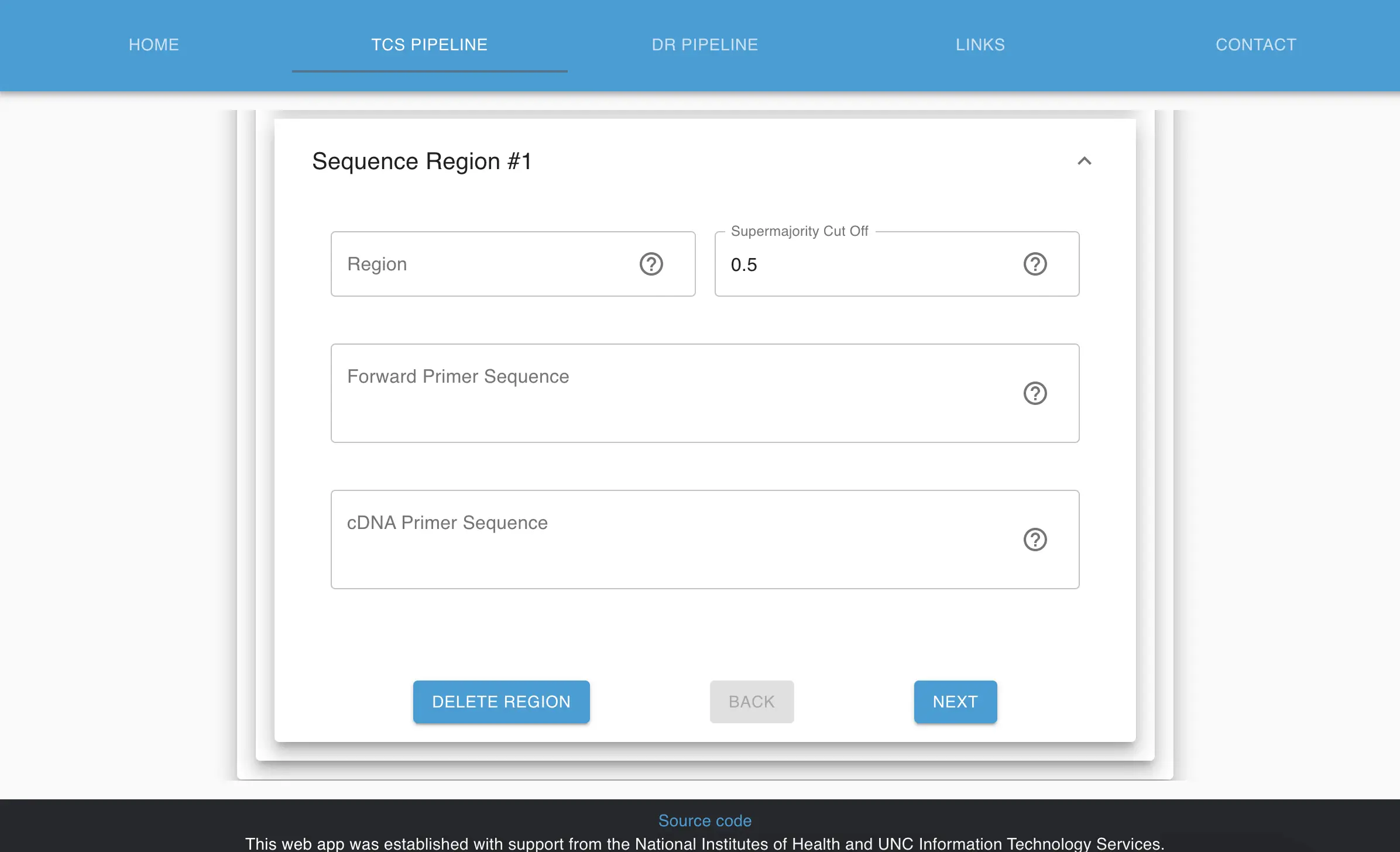
Primer ID is a researcher-facing NGS platform that lets users submit, validate, process, and retrieve sequencing workflows through a Next.js application backed by GCP storage and SLURM-based HPC processing.
The platform connects signed uploads for multi-gigabyte sequence files, database-backed submission parameters, cluster queue initialization, and result delivery for OGV, drug resistance, intactness, and splicing workflows.
GitHub/ViralSeq/viral_seq and GitHub/veg/ogv-dating pipelines.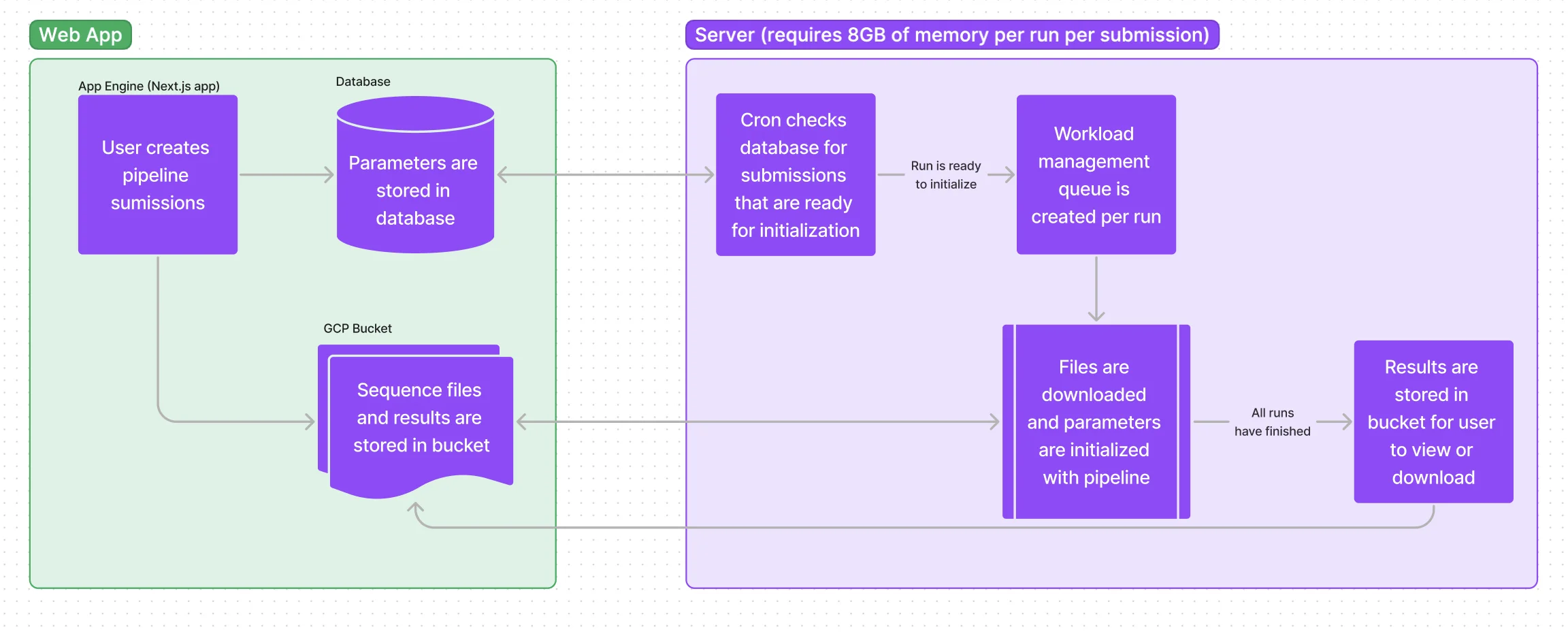
Additional Research Work
Open-source sequencing pipelines used with Primer ID workflows for alignment, mutation analysis, and repeatable research processing.
Research software work focused on visual inspection and interpretation of phylogenetic outputs.
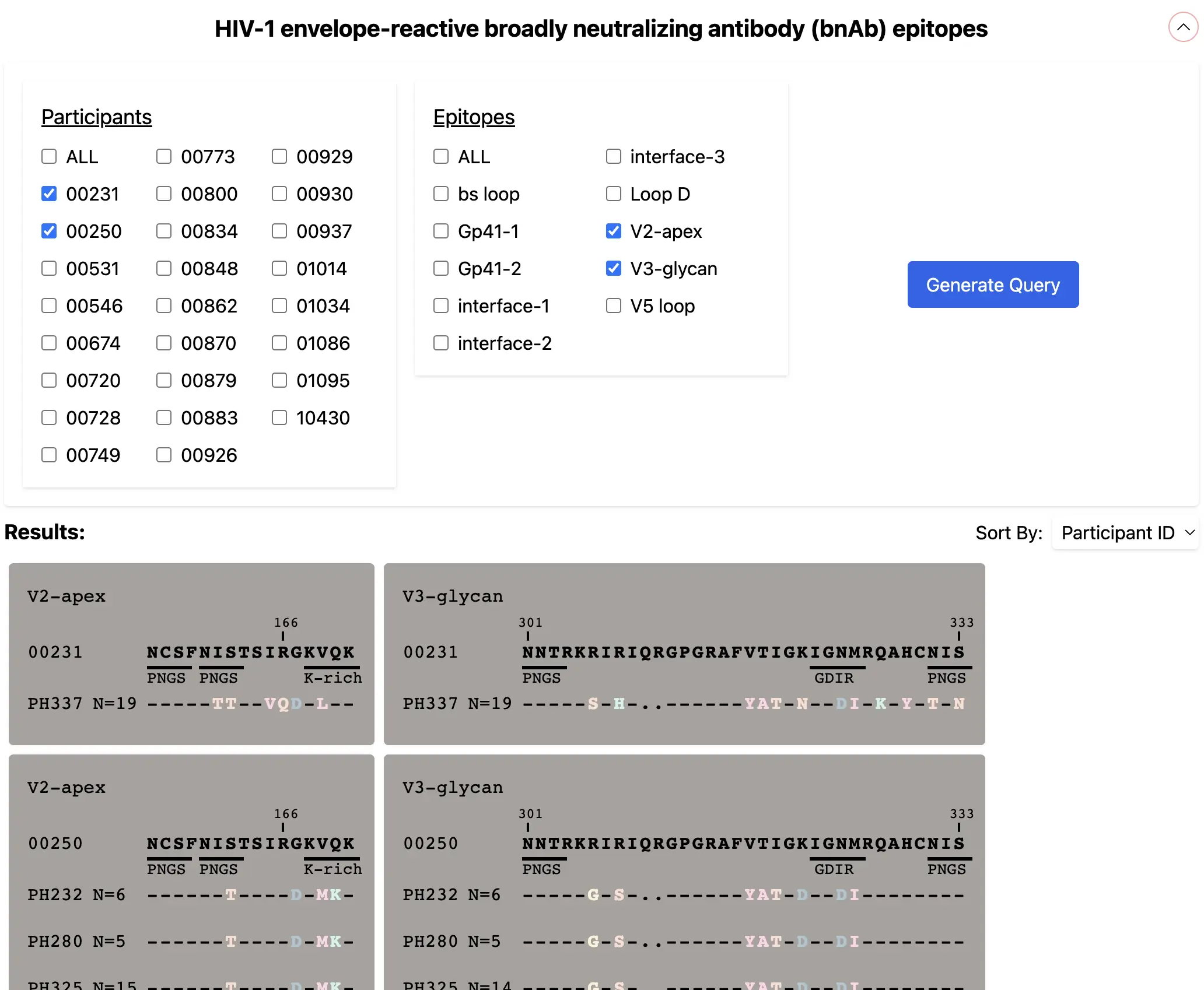
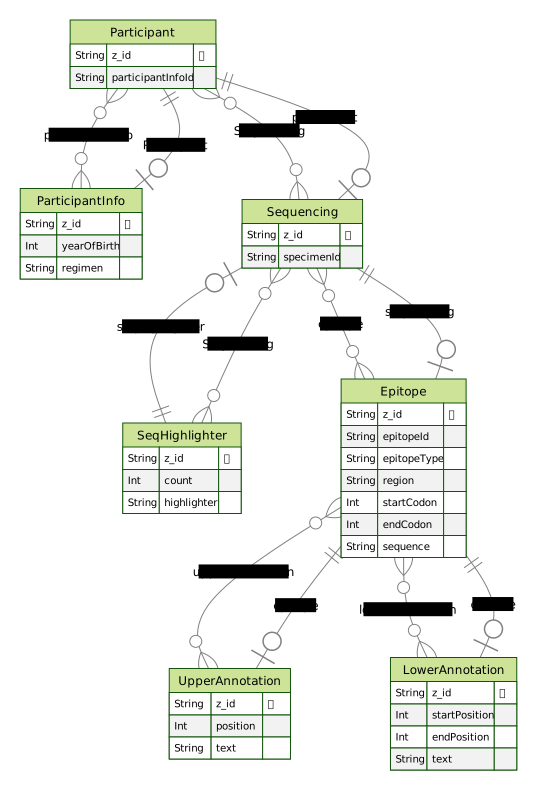
Grant proposal prototype for interdisciplinary comparison of viral antibody, patient, and sequence data.
Technical Capabilities
I am strongest in applied environments where researchers need an engineer who can understand the method, build the workflow, and keep the system reliable as the science changes.
Publications
I am a co-author on multiple publications connected to sequencing research, Primer ID methods, and HIV surveillance.
Zhou S, Hill CS, Clark MU, Sheahan TP, Baric R, Swanstrom R.
Bio Protoc. 2021 Mar 5;11(5):e3938. doi: 10.21769/BioProtoc.3938.
Zhou S, Sizemore S, Moeser M, Zimmerman S, Samoff E, Mobley V, Frost S, Cressman A, Clark M, Skelly T, Kelkar H, Veluvolu U, Jones C, Eron J, Cohen M, Nelson JAE, Swanstrom R, Dennis AM.
J Infect Dis. 2021 Mar 3;223(5):876-884. doi: 10.1093/infdis/jiaa417.
Zhou S, Hill CS, Spielvogel E, Clark MU, Hudgens MG, Swanstrom R.
ACS Infectious Diseases. doi: 10.1021/acsinfecdis.2c00319.
Zhou S, Long N, Moeser M, Hill CS, Samoff E, Mobley V, Frost S, Bayer C, Kelly E, Greifinger A, Shone S, Glover W, Clark M, Eron J, Cohen M, Swanstrom R, Dennis AM.
J Infect Dis. 2023 Jun 7. doi: 10.1093/infdis/jiad211.
Selected Earlier Work
Three.js, React Fiber, Observable, and chart-driven interfaces used to explore simulation, motion, and scientific outputs.
A Next.js writing application used to sharpen product design, authentication, realtime editing, and performance work.
A freelance PWA for drag-and-drop sheet music creation, PDF output, and offline-friendly client workflows.
Contact
I am interested in work with universities, national laboratories, NIH-funded teams, public-health groups, and research institutions building software around scientific workflows, sequencing data, computational pipelines, and long-term production support.